

-
 Nov 19, 2025
Automated Glue Dispensing Machine:35–50% Less Waste Now
Automated Glue Dispensing Machine slash reject rates & labor costs in SEA & Middle East factories. 2025 guide: features, ROI cases, incentives & budget recommendations. -
 Sep 18, 2025
How do automated soldering machines work
Automated soldering machines work by using programmable robotic arms and control systems to accurately apply heat and solder to components on a printed circuit board (PCB) or other assemblies. -
 Sep 18, 2025
PVA Glue Dispenser:Complete Guide
PVA (Polyvinyl Acetate) glue dispenser is a specialized device designed to apply PVA adhesive precisely and efficiently. PVA glue is widely used in woodworking, packaging, paper bonding, bookbinding, and various industrial applications. -
 Sep 04, 2025
What is the working principle of glue dispensing machine?
The machine works by controlling the flow of glue through a dispensing nozzle, using air pressure, mechanical pumps, or screw-driven mechanisms. The goal is to accurately deposit a predetermined volume of adhesive onto a target surface. -
 Sep 04, 2025
Resin Dispenser Machine:Applications,Types,and Buying Tips
A Resin Dispensing Machine is a system that accurately mixes, meters, and applies resin materials in a controlled manner, often for industrial and manufacturing processes. -
 Aug 27, 2025
What is a silicone potting machine
A silicone potting machine is an automated industrial system designed to precisely meter, mix, and dispense liquid silicone (and other resins like epoxy and polyurethane) into and around electronic components and other products. -
 Aug 19, 2025
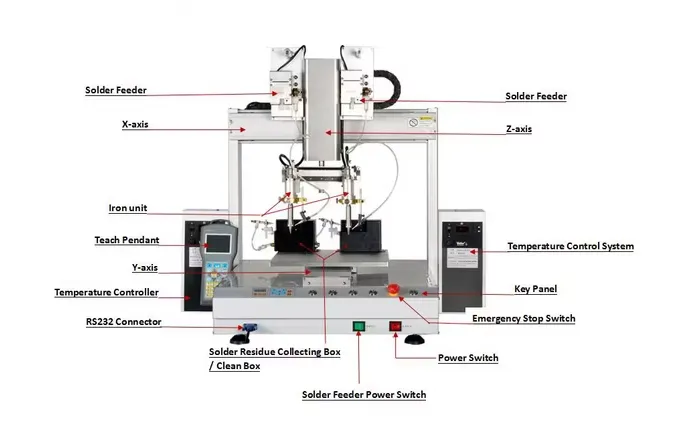
What materials can a Robotic Soldering Machine handle?
Robotic soldering machines can handle a wide variety of materials, including various metals like copper, steel, aluminum, gold, and silver, as well as plastics like PP, PVC, and PET. -
 Aug 19, 2025
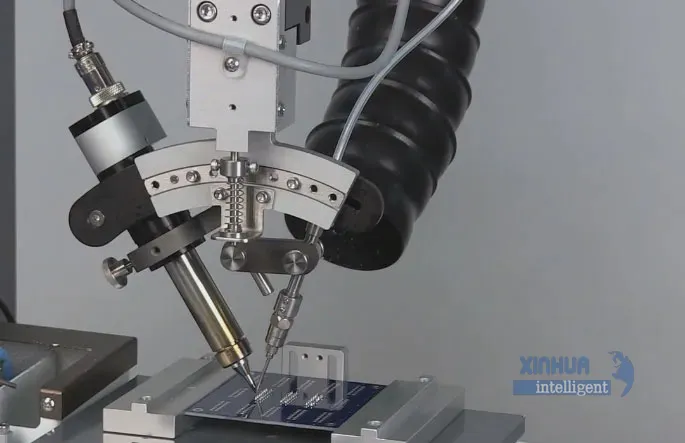
What is a robotic selective soldering machine used for?
A robotic selective soldering machine is used to automatically solder individual wired components onto printed circuit boards (PCBs) with precision and repeatability. -
 Aug 19, 2025
What factors affect the price of a robotic soldering machine?
price is determined by machine capacity, features, complexity, intended application, maintenance needs, and market supply factors. Manufacturers should balance these elements against their production requirements and budget to select the optimal soldering robot solution. -
 Aug 19, 2025
What is a PCB soldering robot and how does it work?
A PCB soldering robot is an automated machine designed to solder electronic components onto a printed circuit board (PCB) with high precision, consistency, and efficiency. It replaces or supplements manual soldering in electronics assembly, especially for complex, high-volume, or high-reliability products. -
 Aug 14, 2025
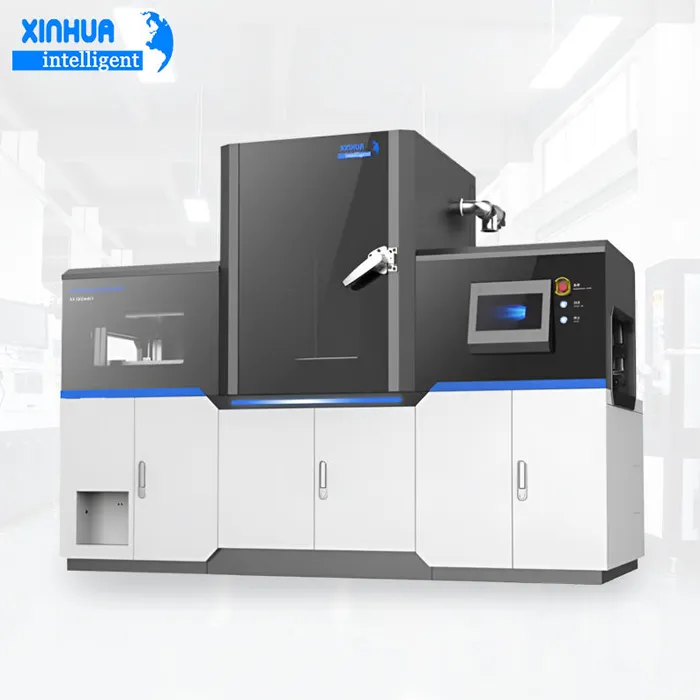
What is PCB potting machine
A PCB potting machine is specialized equipment designed to dispense and cure potting materials (such as epoxy, polyurethane, or silicone) onto or around printed circuit boards (PCBs) to protect them from moisture, dust, vibration, chemicals, and thermal shock. -
 Aug 14, 2025
What is a sealant dispensing machine
A sealant dispensing machine is a device used to accurately and efficiently apply adhesives and sealants, playing a crucial role in various industries like automotive, construction, and electronics. -
 Aug 14, 2025
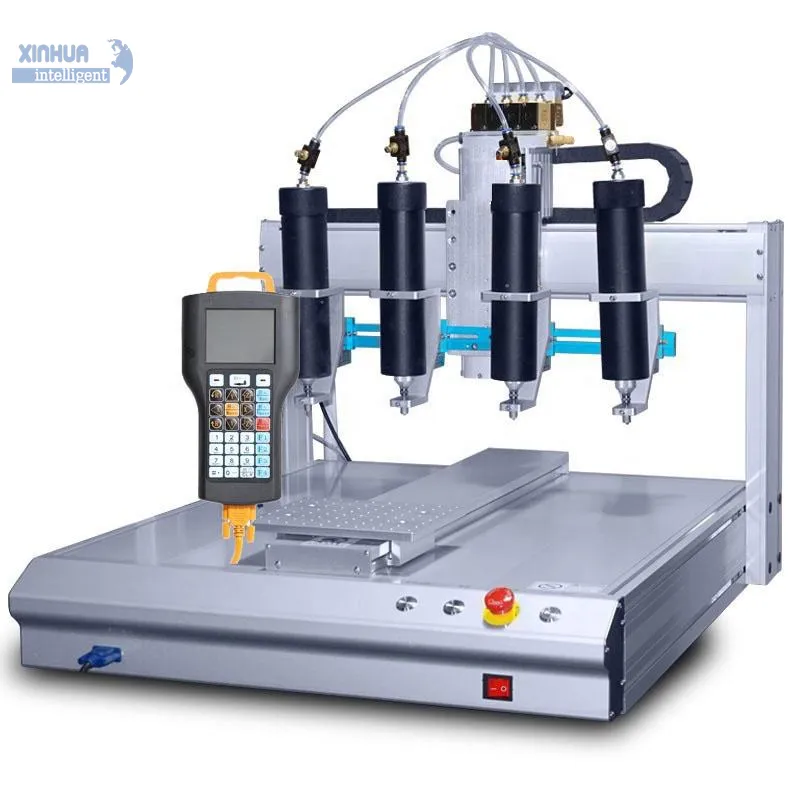
What is a silicone dispensing system
A silicone dispensing system is a device or equipment designed to accurately and controllably apply silicone materials, such as adhesives, sealants, or coatings, in various applications. -
 Aug 13, 2025
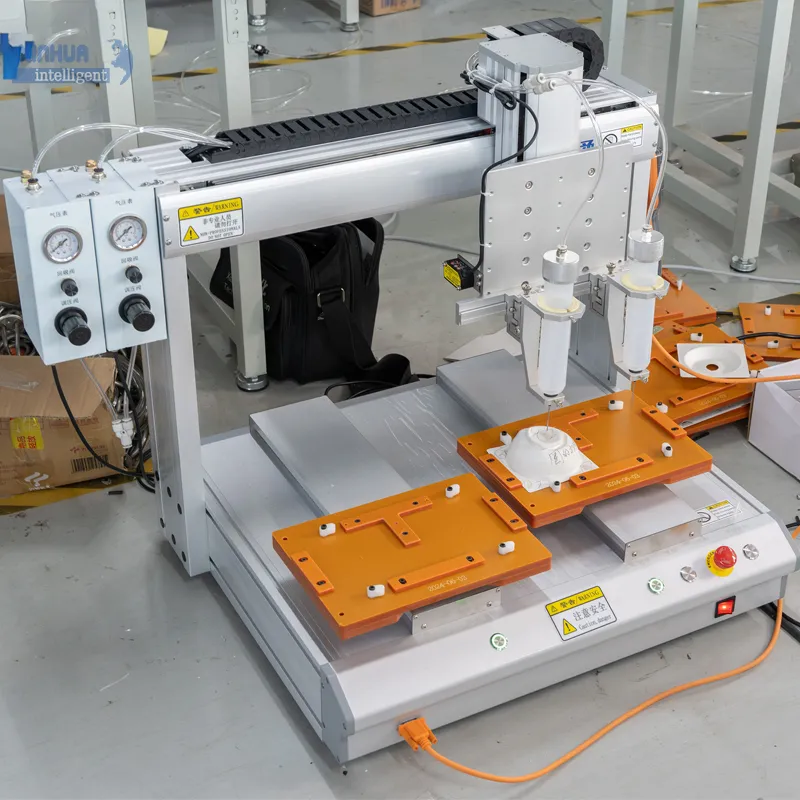
What is a liquid dispenser machine?
A liquid dispenser machine is a device designed to dispense liquids or adhesives in a controlled and precise manner. -
 Aug 06, 2025
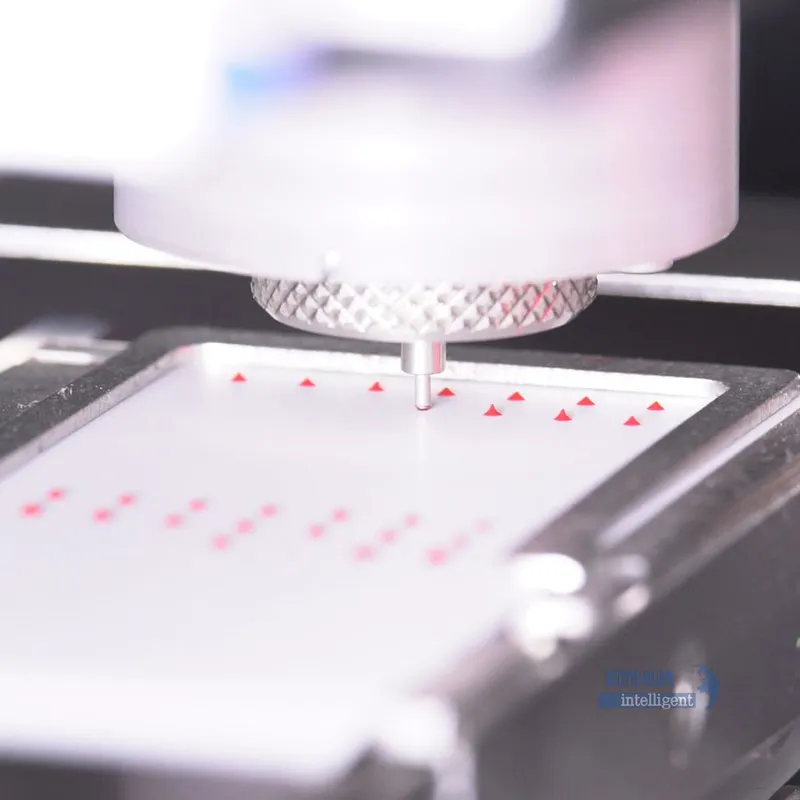
How to choose the right glue dispenser for SMT applications?
selecting the right SMT glue dispenser depends on balancing production volume, precision, adhesive properties, and cost considerations, while ensuring the machine features align with your technical requirements and maintenance capabilities. -
 Aug 06, 2025
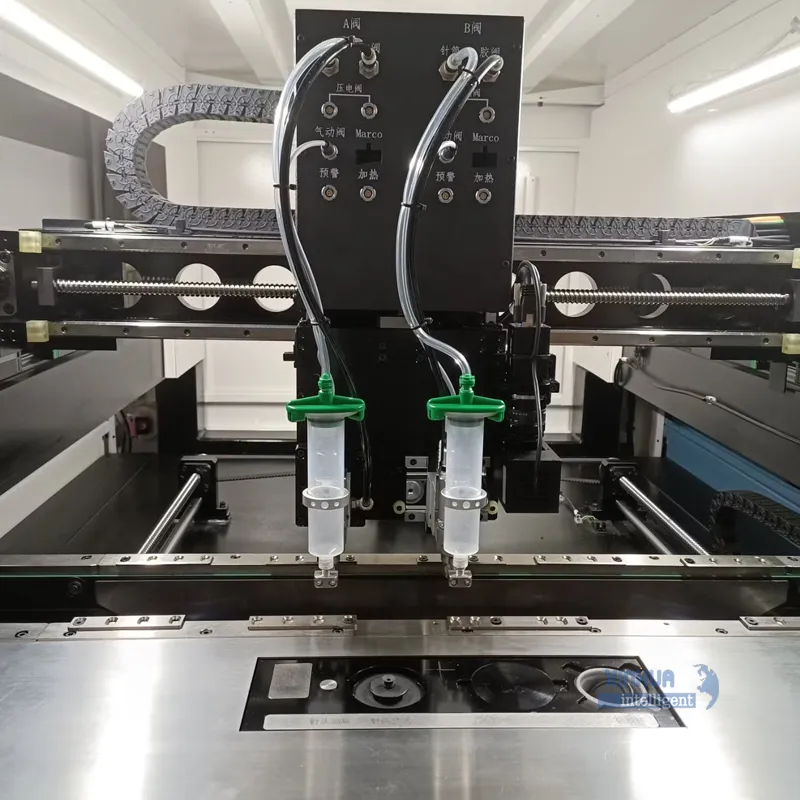
What is an SMT glue dispenser machine used for?
An SMT (Surface Mount Technology) glue dispenser machine is used primarily in electronics manufacturing to automate the precise application of adhesive onto printed circuit boards (PCBs) or electronic components during assembly. -
 Aug 06, 2025
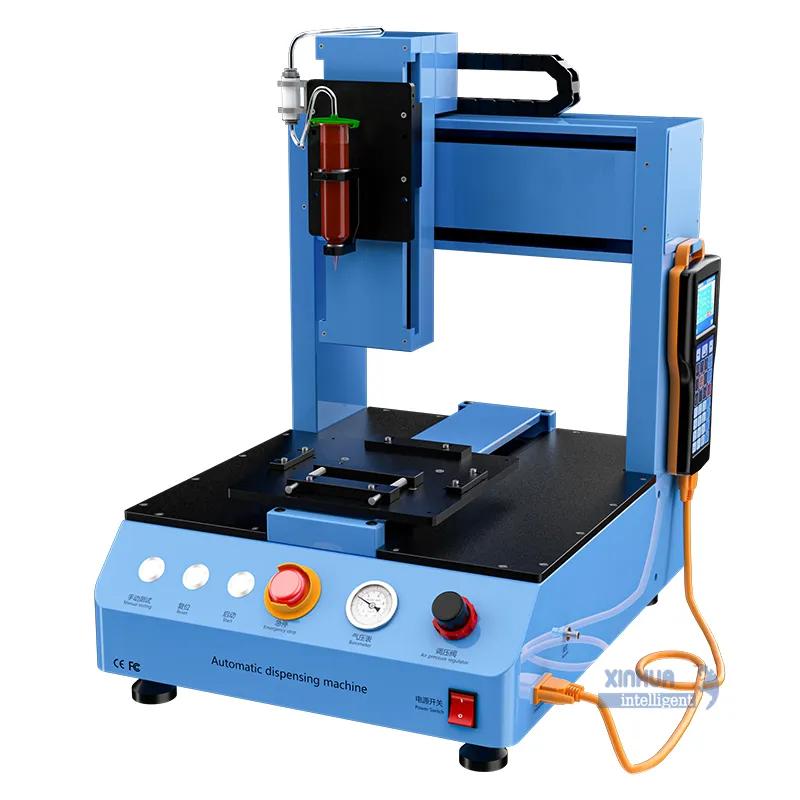
What materials can UV glue dispensing machine bond?
UV glue dispensing machines can bond a wide variety of materials effectively. Common materials that UV glue can bond include glass, metal, wood, plastics, ceramics, and some composites. -
 Aug 06, 2025
Are UV glue dispensers suitable for PCB assembly?
UV glue dispensers are indeed suitable for PCB assembly. Automated UV glue dispensers are widely used in PCB assembly processes for precise dispensing of UV-curable adhesives, which are essential for securing components, conformal coating, underfill applications, and more.
Popular Products
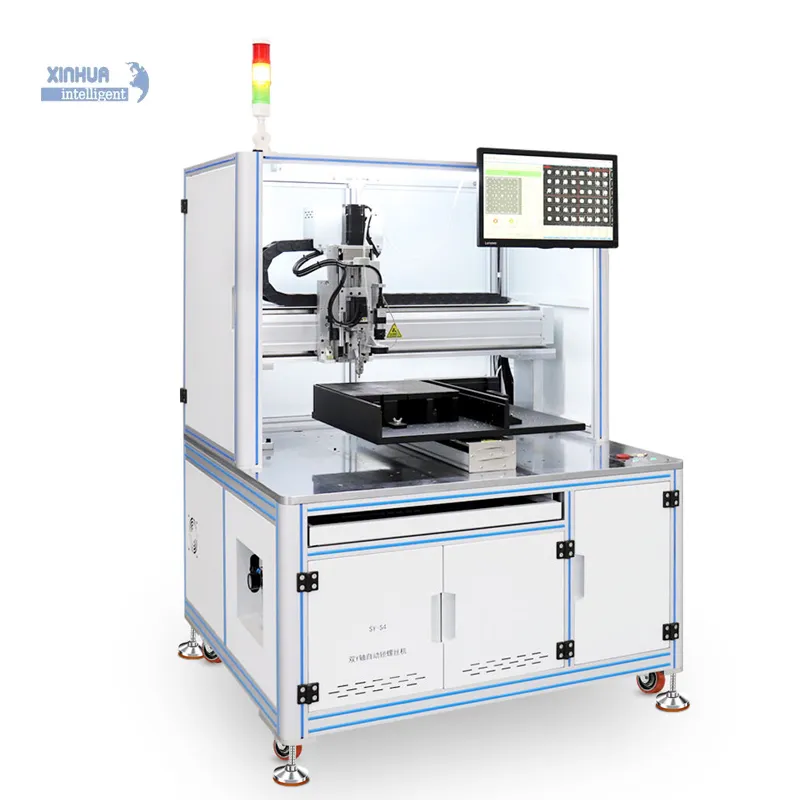
Automatic Screw Assembly Machine
Automatic screw assembly machine for LED panel lights with advanced visual system ensures precise screw positioning, high efficiency, and quality control. Ideal for LED panel production lines.
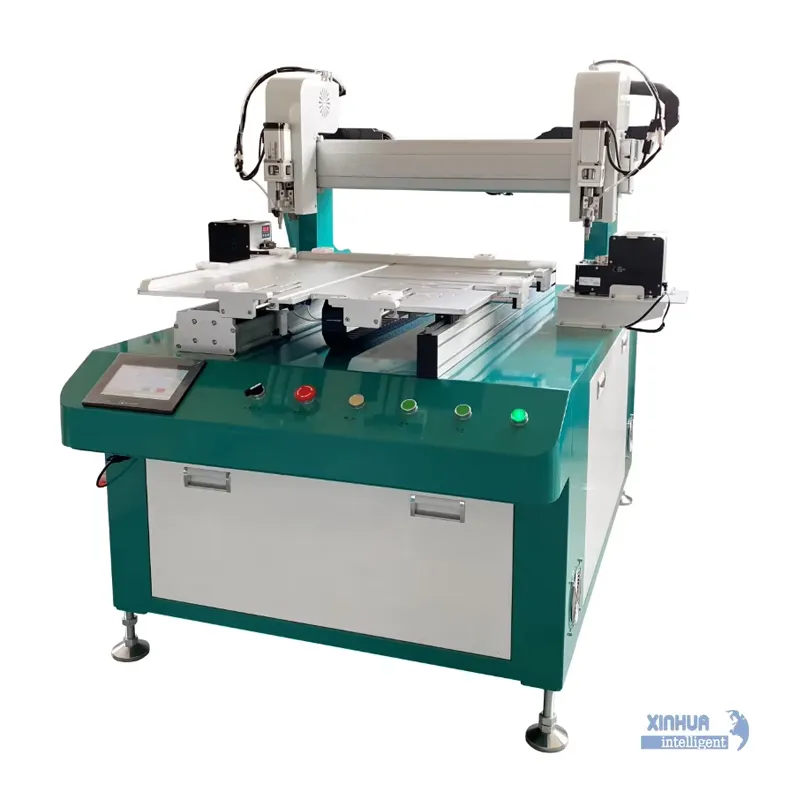
Screwdriver with Automatic Screw Feeder
High-speed industrial screwdriver with automatic screw feeder for panel lights, electronics, and more. Dual servo drivers boost productivity and stability.

3 Axis Industrial Glue Dispenser
The 3 Axis Industrial Glue Dispenser is engineered for high-precision adhesive and fluid dispensing applications. Featuring a rigid gantry structure, it offers exceptional stability and repeatability, making it ideal for medium to large workpieces.
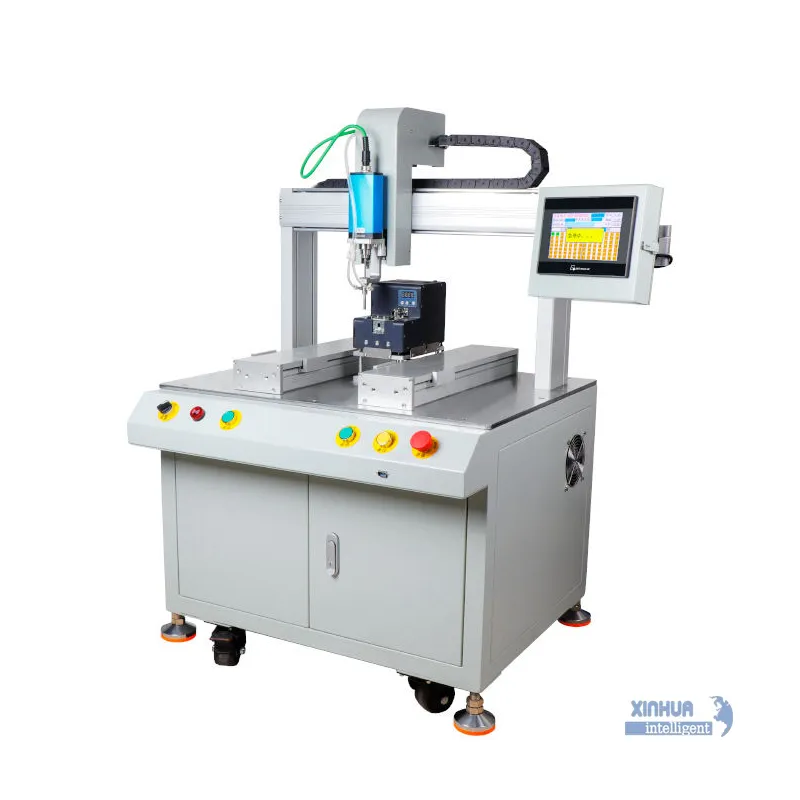
Three Axis Auto Screw Locking Machine
Boost production with a floor-type 3-axis auto screw locking machine featuring vacuum adsorption, double stations, and ±0.02 mm accuracy.
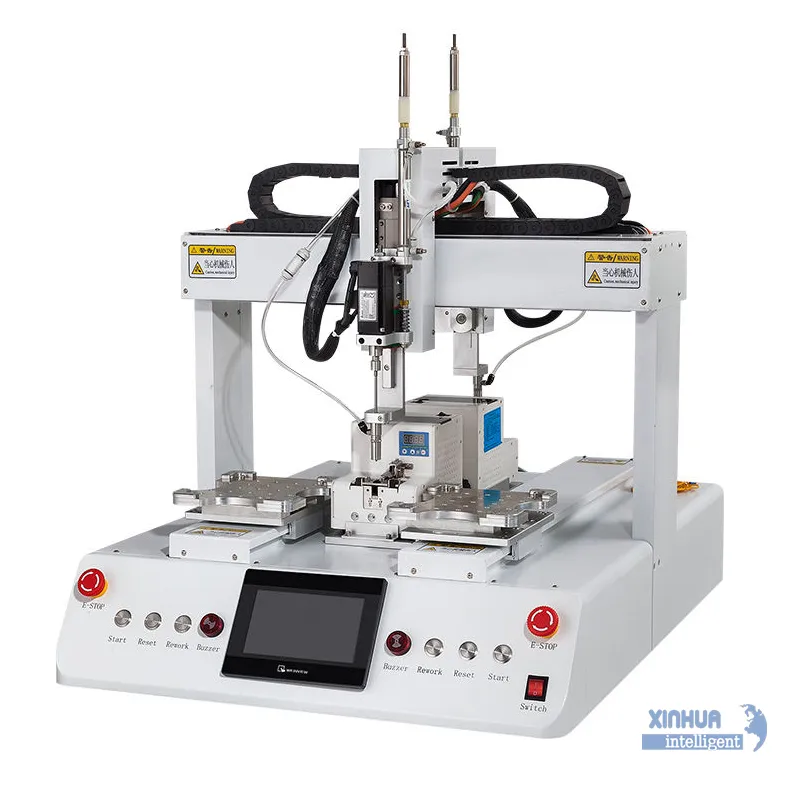
Desktop Automatic Screw Tightening Robot
Desktop Automatic Screw Tightening Robot with back-to-back dual-head design for M1.5–M5.0 screws. High precision ±0.02mm, fast, efficient, and easy to operate for electronics, appliances, and automotive parts.
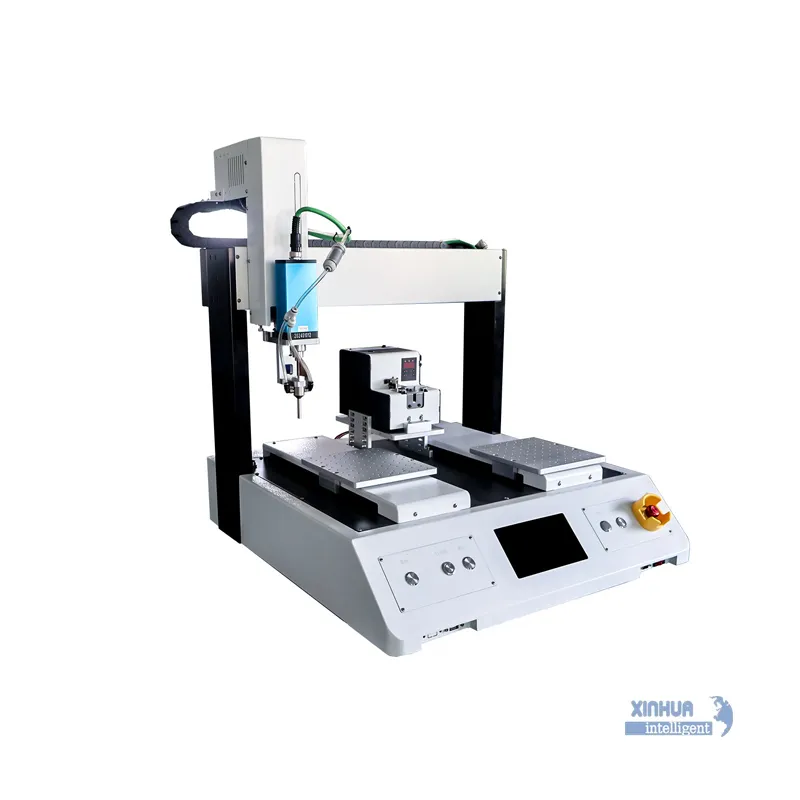

Desktop Six-Axis Automatic Screw Fitting Machine
High-speed Six-Axis Automatic Screw Fitting Machine with dual-station, double-head design, ±0.02 mm precision, intelligent feeding, and smart detection.


Benchtop Automatic 5-Aixs CNC Glue Dispenser Machine
High-precision Benchtop Automatic 5-Aixs CNC Glue Dispenser Machine for epoxy, silicone, SMT, UV adhesives with CCD camera, ±0.015mm accuracy, ideal for PCB & electronics.

Benchtop Automatic 5-Aixs Glue Dispensing Robot
The glue dispensing robot use 5 axis, R axis can rotate 360 degrees, repeatability of ±0.02mm,with the interpolation function, all the axis can make points, drawing lines, arcs, some complicated draws, etc.


Benchtop 4 Axis SMT Glue Dispenser Machine
Dual-station SMT glue dispenser machine delivers ±0.02mm repeatability, 300 times/sec high-speed output, versatile trajectories, and multiple nozzle options for industrial use.

3/4/5 Axis Benchtop CCD Visual Glue Dispensing Machines
High-precision CCD visual glue dispenser with 3,4,5 axis options. Ideal for PCB, UV, and silicone dispensing with HIWIN guide rails and servo motor drive.

Desktop 3-Axis Automatic Glue Dispenser Machine
Benchtop 3-axis automatic glue dispenser machine offering 0.01ML precision, programmable control, 0.02mm accuracy, and lifetime technical support.

Desktop 3-Axis AB Glue Dispenser Machine
Desktop 3-Axis AB Glue Dispenser ensures accurate 2-component dispensing with dual stations, 360° rotation, and ±0.02mm precision for complex designs.
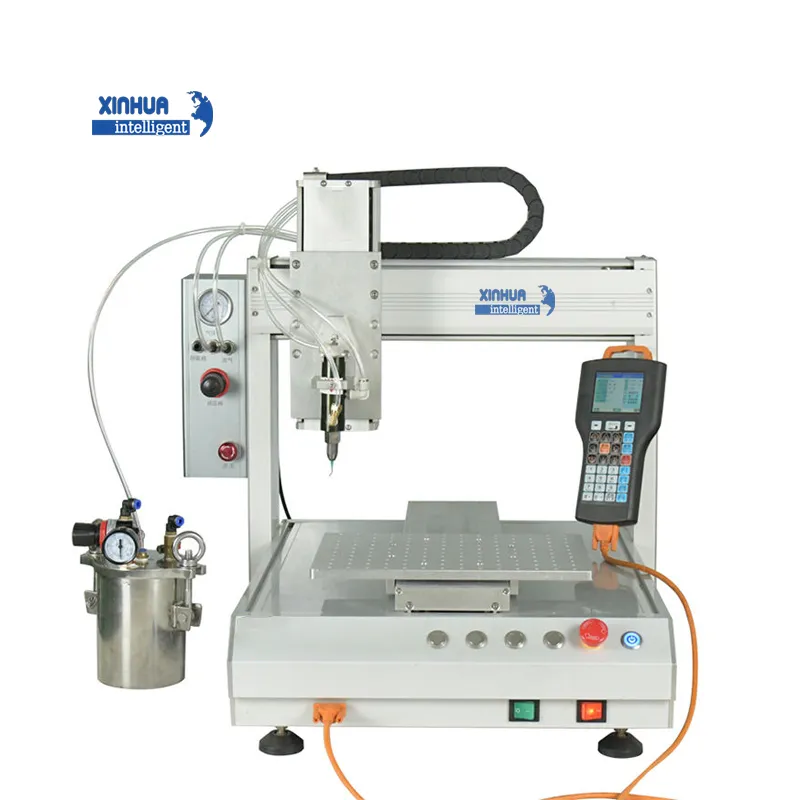
Epoxy Resin Dispensing Machines | 3-Axis,4-Axis
High-precision automatic glue dispensing machines with 3-axis control, suitable for epoxy resin, UV glue, and more. Features include repeat accuracy of ±0.05mm, support for multiple file formats, and a maximum load of 5kg on X Y axes.

5-Axis Dual-Platform Automatic Soldering Robot
The 5-axis automatic soldering robot, with the drive of precies stepper motor,the soldering iron unit can be adjusted to any direction. It can achieve 360° free rotation by controlling the R-axis.

Automatic SMT Soldering Machine - Four Axis
The machine is a state-of-the-art four axis SMT automatic soldering machine designed for high-precision soldering of electronic components onto printed circuit boards (PCBs).

Automatic PCB Soldering Machine - 3 Axis
The automatic pcb soldering machine supports multi-dimensional soldering techniques, including point soldering and drag soldering.
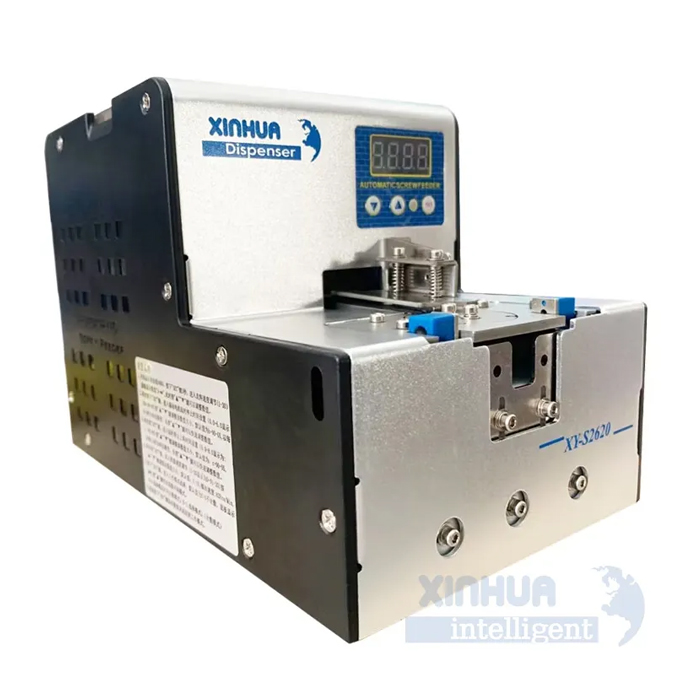
Automatic Screw Feeding Machine,Portable Automatic Screw Feeder
This portable automatic screw feeding machine is suitable for M1–M4 screws. According to the size of the guide rail, replace the distribution turntable/plate (which can be customized according to the needs of customers).

Handheld Automatic Screw Feeder
The handheld automatic screw feeder apply to different screws, through adjusting and changing the small parts, easy to operate and change different screws.
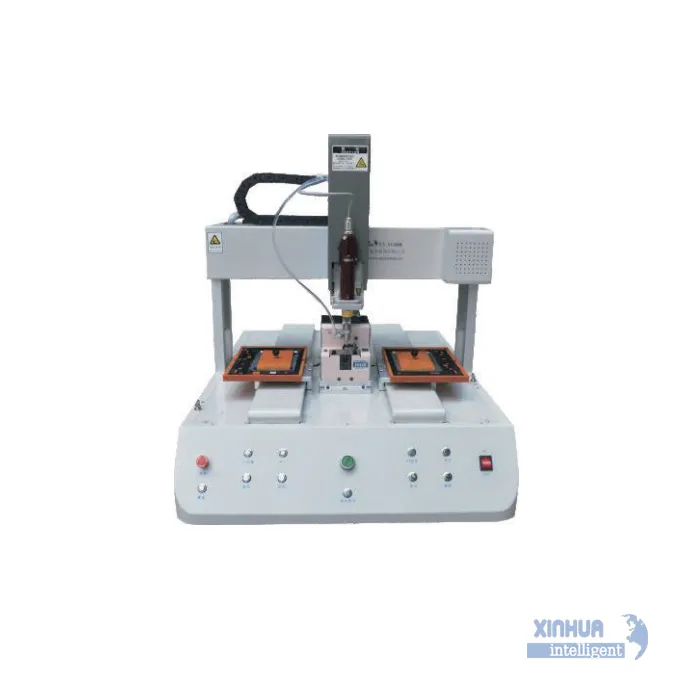
6 Axis Desktop Screw Tightening Machine
The desktop screw tightening machine uses two screw drivers can operate and lock 2 screws at the same time to improve efficiency.
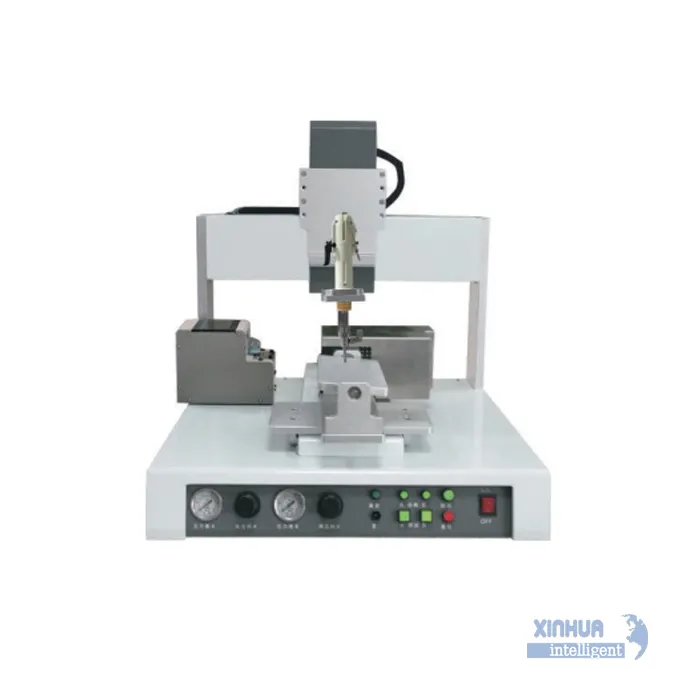
Benchtop Automatic Screw Fastening Robot
The automatic screw fastening robot placement platform can be turned to 0~360°, suitable for different sides of screws locking.
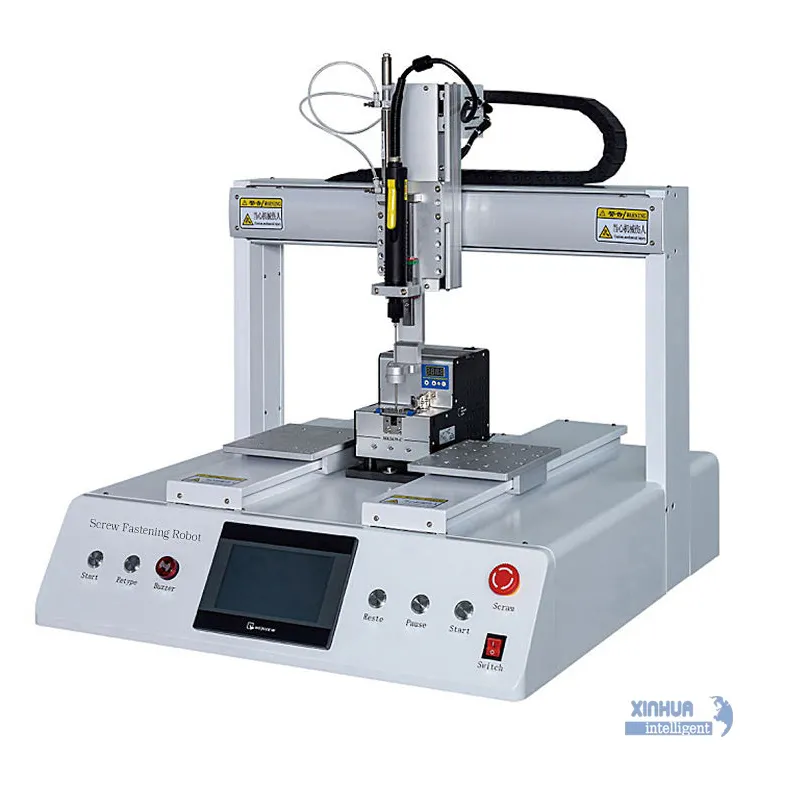
4-Axis Automatic Screw Locking Machine
The 4-Axis Automatic Screw Locking Machine equipped with double platform,without special person responsible for the product loading and unloading, which can save labors.
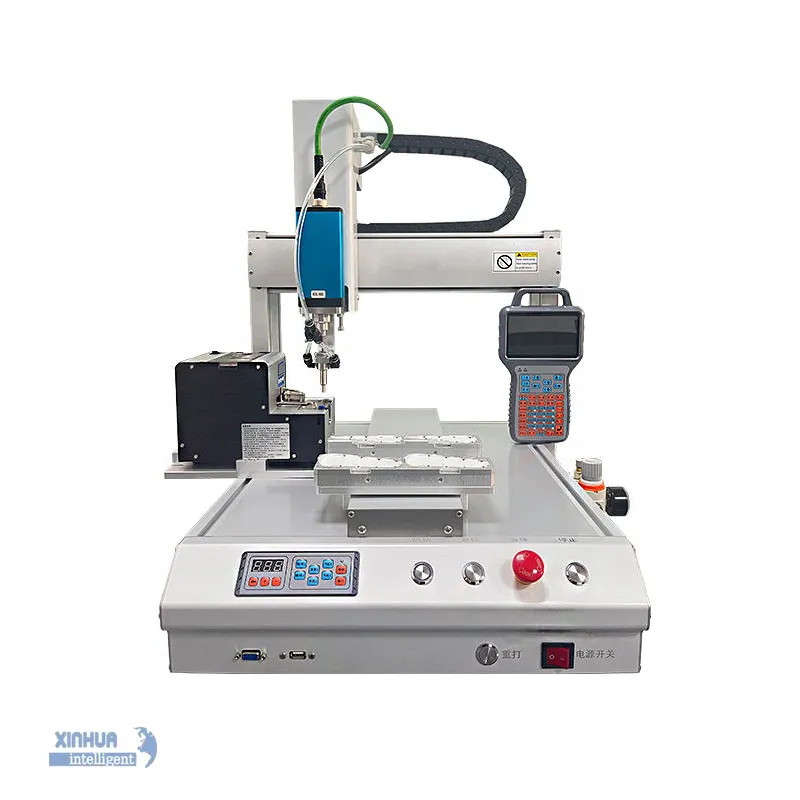
3 Axis Automatic Screw Driving Machine
The 3 axis automatic screw driving machine apply to most kinds of screws,suction pay type, blowing type according to customer needs.Suitable for mobile phone, digital products, photoelectric, medical, household appliances and other industries.
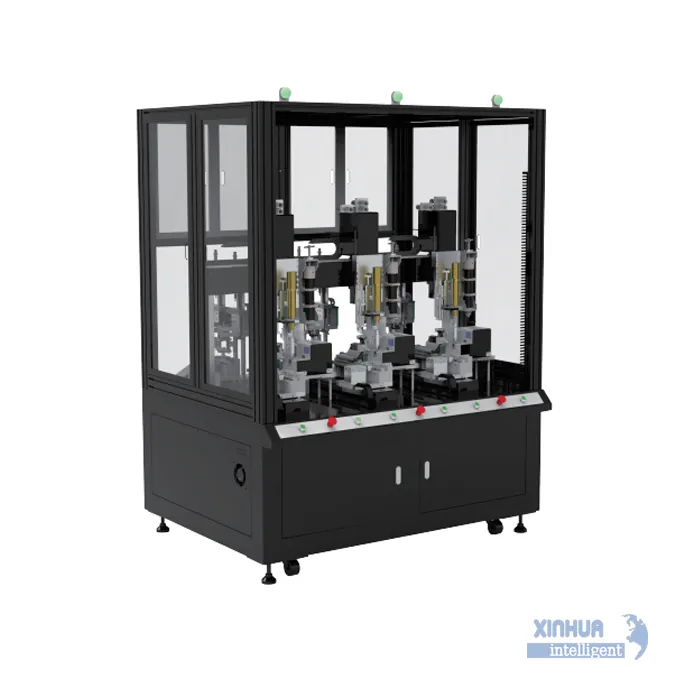
Three Station Automatic Screw Fastening Machine
The automatic screw fastening machine uses three station design, simultaneous operation of three electric batches, doubling production efficiency,automatic loading and unloading, achieving unmanned operation.
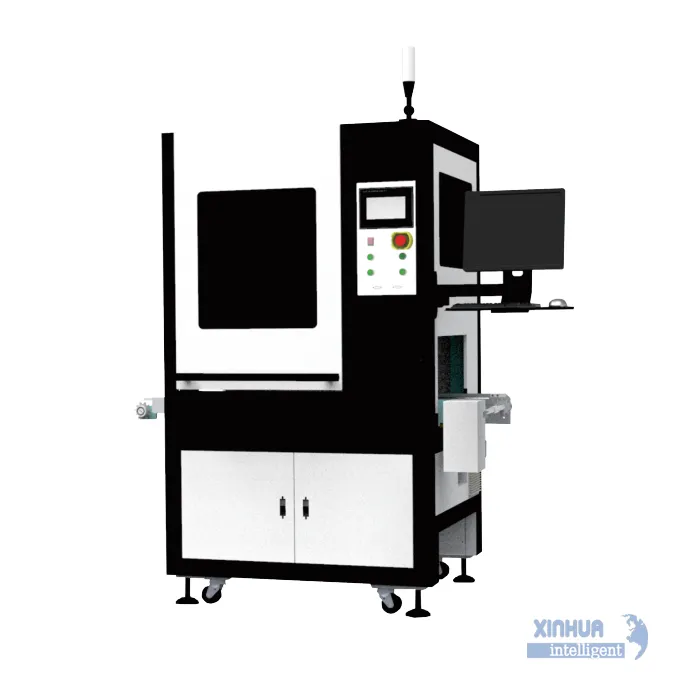
Online Auto Screw Tightening Machine
This type of auto screw tightening machine is widely used in the production of radiator digital products, lighting equipment, locking toys, and various hardware industry applications.

Multi-Axis Online Automated Glue Dispensing Machine
The multi-axis online automated glue dispensing machine consists of three rubber heads were operated at the same time, and the output doubled.

5 Gallon Adhesive Supply Pump
The 5 Gallon Adhesive Supply Pump uses motor + screw pump + cylinder works together to provide stable fluid pressure.
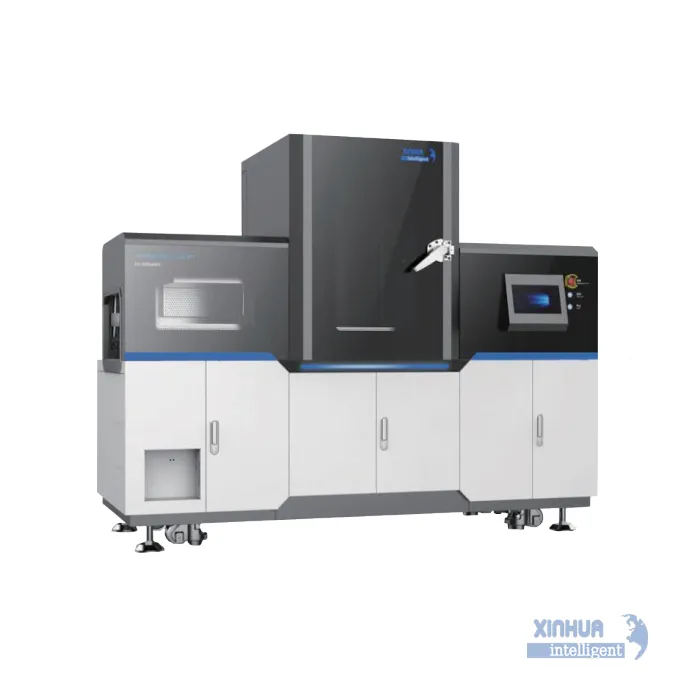
Online 3 Stage Vacuum Automatic Potting Machine
The online vacuum automatic potting machine use 3 stages operate simultaneously, eliminating the need for repeated vacuuming and releasing. This results in high production efficiency.
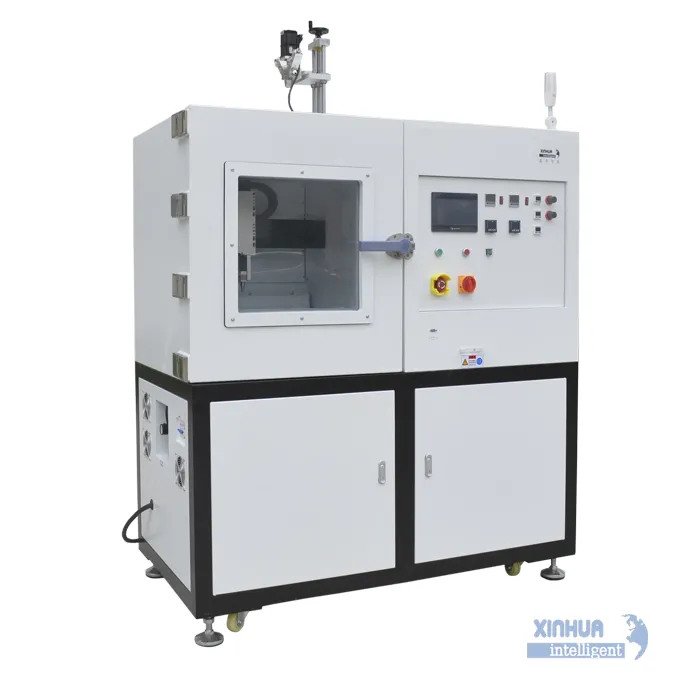
Automatic Vacuum Potting Machine
The automatic vacuum potting machine purpose is to greatly improve the glue quality, reduce bubble formation, achieve a high degree of automation, shorten the process, and improve production efficiency.
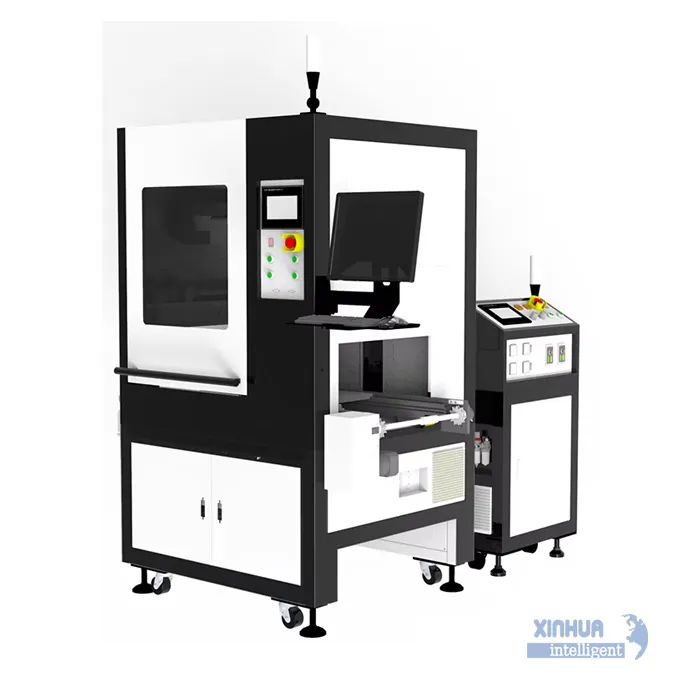
Online Automatic AB Potting Machine
The online automatic potting machine designed for automatic metering, mixing, degassing, dispensing, and potting of two-component (AB) adhesive materials such as epoxy, silicone, polyurethane, or resin in precise ratios.
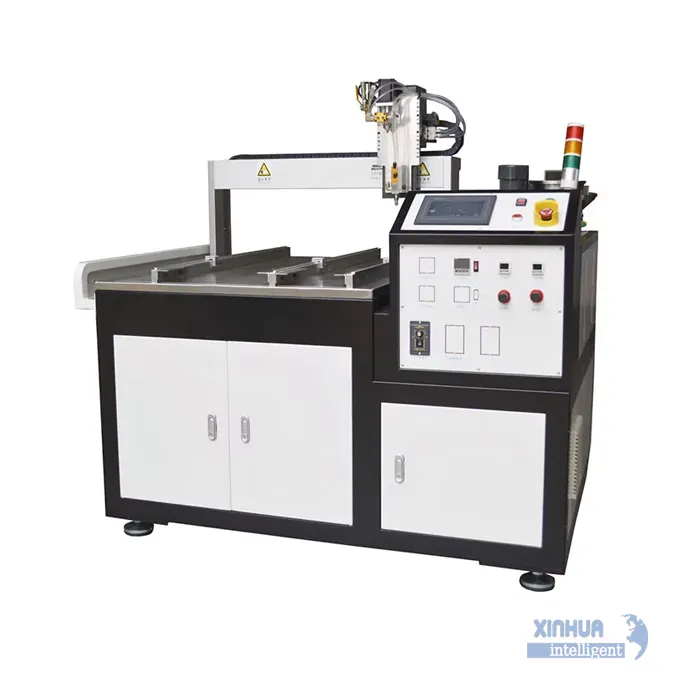
3 Axis Automated Potting Machine
The automated potting machine can be used for solar junction box, instrument, sensor, transformer, generator,relay, industrial capacitor, ballast and other double liquid glue requirements;
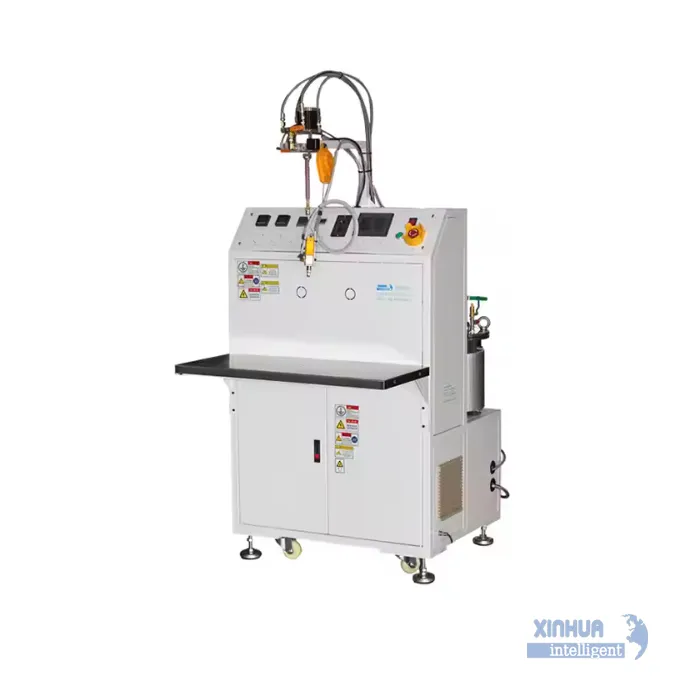
Semi Automatic Potting Machine
The semi automatic potting machine ratio of 1:1 to 100:1 can be adjusted, suitable for polyurethane,silicone, AB epoxy resin and other types of AB glue,so as to meet your needs for various gluing;

High Speed Automatic Glue Dispensing Machine XY-G550/XY-G1200
The high speed automatic glue dispensing machine is used in manufacturing processes such as adhesive sealing, grease lubrication, and solder paste application. It is designed for non-contact jet dispensing applications.

Auto Glue Dispenser with Dual-Module Four Valves
The auto glue dispenser adopts a dual-module and dual-valve asynchronous design,supports products within 2500mm without requiring segmented board feeding and equipped with automatic weighing and automatic height detection functions.

3-Axis Inline Automatic Glue Dispenser
This 3-axis automatic glue dispenser is designed based on the customer's production line requirements,adopts the latest multi-axis dispensing control system.

CCD Visual Glue Dispensing Machine XY-QE400
The visual glue dispensing machine uses CCD system can identify products placed randomly on the fixture and can perform dotting, drawing, S-shapes, circles, and other dispensing patterns.